What would life look like if we looked at it as a whole?
When Humphrey Davy was splitting apart compounds with electricity and revealing novel elements to the gasps of his classroom in the early 1800s, there were poets and artists seated there as well. When he tested laughing gas on himself before offering it to the class, he recorded a poet commenting that “I feel like the sound of a harp.” Such a detail was considered scientific. The romantic poet Samuel Taylor Coleridge was known to be in Davy’s class. The ferment of discovery was as broad as it was exact, as internal as it was external. And these two things didn’t cancel each other out.

The scientific revolution, with its emphasis on evidence above all, has led to a divorce of philosophy and science. Natural philosophy has faded from the modern world, becoming a shell of something that used to be bigger than life. Science, with its controlled and closed environments and inductive, reductionist reasoning, has, without question, advanced humanity greatly.
However, we find ourselves in a state of impasse.
It becomes more and more obvious that life is not lived in a controlled environment. The words of Sartre become increasingly resonant: “Everything has been figured out except how to live.”
What would life look like as a whole? What would your life look like if you saw it as a whole?
It is like asking to see a duck as a symphony or yourself as a riddle. What might your life look like, and how might it feel? How are we seeing it?
Children look at life as a whole. They don’t divorce their sense of possibility from what is actual. They don’t shrink themselves, and they don’t ignore beautiful lit-up things. They love to play and explore the world every day, and they don’t see collaboration as a chore.
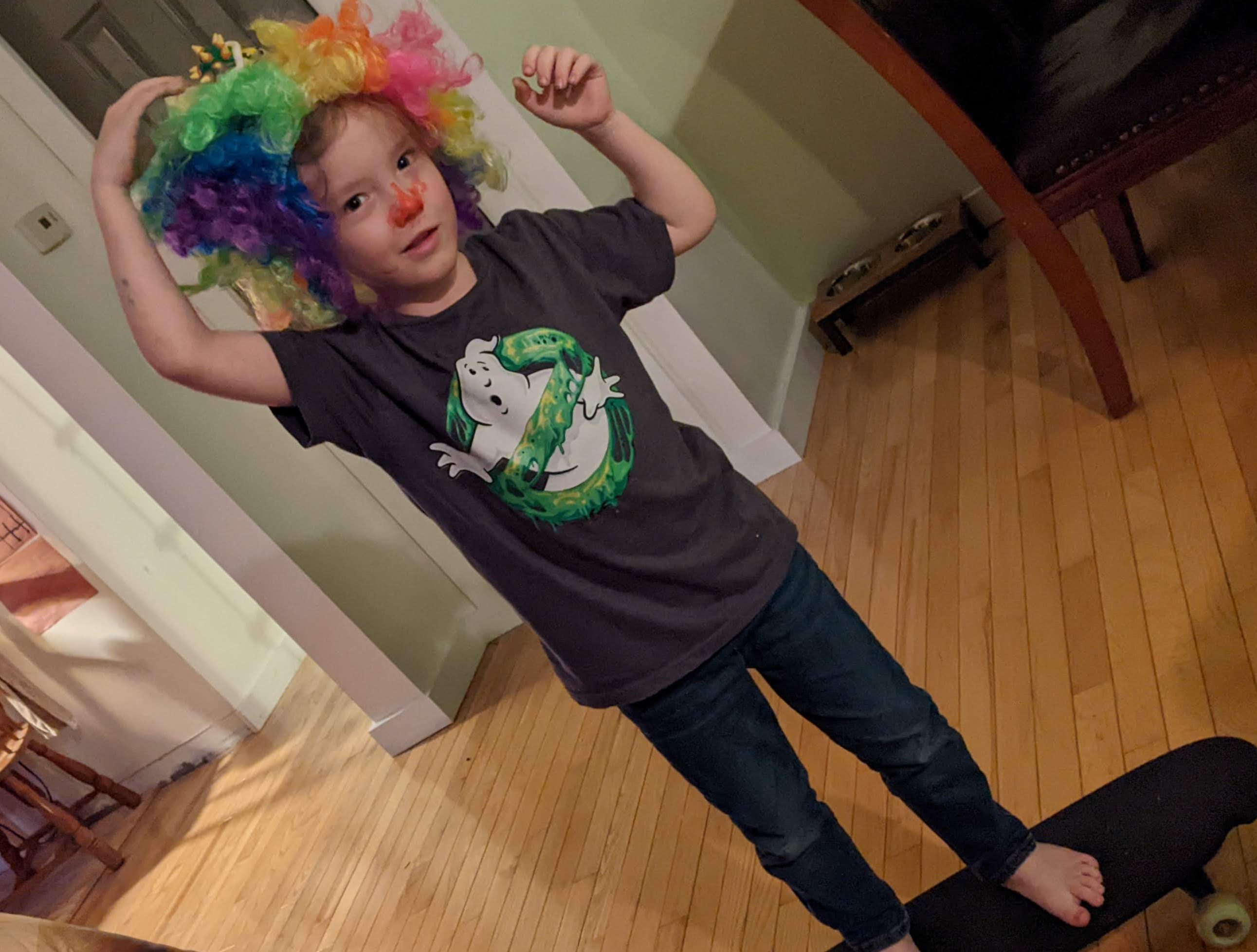
Natural philosophy opens up avenues of inquiry that are essential to playing the game of life.
Ignoring the observer means ignoring the real world and ourselves. In keeping the insides out of the outsides, we hollow things, needlessly robbing humanity of the nourishing substance of living.
It is intuitive to recognize a poetic connection with the moon, the sun, and the stars. It may be less intuitive to consider that poetry and archetypes also have a scientific connection.
When you consider the psyche and the observable world, it all comes under one umbrella. That umbrella is physics.
The root word of physics is “phys,” which is Greek for “nature” and “natural order.”
Nature is the study of the physical world. This also encompasses the invisible aspects of physics that are at work. And these invisible physics extend to the reality of reflective thought and feeling. It is why one’s posture changes when they are relieved of stress. It is why a smile lifts a face up to the source of light and freedom from which it is born and is striving to reconnect with.
Natural philosophy is not embraced today like it was in the time of Goethe or Aristotle. But that doesn’t mean that you can’t embrace it. Natural philosophy invites you to lead a life of wonder and fiery curiosity. It invites you to try things that are truly worthwhile. It invites you to consider what questions to ask before you go about searching for an answer. It invites you to play with the physics that you see, feel, and experience.
Might we detect in the collective unconscious a movement that binds us together? Could this movement that binds us also, paradoxically, grant us the freedom to establish our uniqueness? Is there an invisible physics to discover, which, if applied, can strengthen existence?
If in alienating philosophy from science we have distanced ourselves from the natural world, could reuniting these two help us reclaim a natural wholeness? What are the implications? More peace? More discovery? More freedom? New laws?
What could it mean to understand the physics that extend outward and inward, from the star that twinkles back to us and the poetry it inspires?
What if there is physics at play with poetry? What if there is physics at play with trying hard, loving someone, feeling out of sorts, or searching for answers?
The subatomic world is a world of action. It is the same action that you know. It is the action that you take when you get out of bed and hustle to work. It is the action that you decide to take when you make up your mind. It is the action that you behold when you watch your dog run through the grass, the plate fall to the ground, and the birds take flight from a tree.
The physics preserved in the zodiac invites the individual to consider each movement, symbol, and archetype from their own perspective. The individual draws from the farthest reaches of the cosmos and all they understand ‘out there,’ synthesizing it with all that has come before in their own life, all that they feel at the depth of their soul, and the privacy of their sensations. The synthesis is toroidal, entirely open, yet also distinct.
And from something like such an arrangement comes, once again, life seen as a whole. Great works of art, literature, and music continue to shape the perspectives of people as they strive to see life as a whole. Great movements of history, breakthroughs of science, and collective challenges all produce a new whole from which the individual, whole unto themselves, reflects upon and shares. We continue to take the whole world in and reflect it back out. Like breathing. This is the torus flow of nature.
What could this mean for you today? Even if you were to indulge me in a ‘secret physics’ preserved by the zodiac and agree that nature is toroidal in character, how would this change your life?
The physics of nature are an invitation to apply them to the life that you lead.

For example, if, as the zodiac reveals, contraction and expansion are linked, with one increasing the other, it is also true that “cinching yourself up’ in a movement of alignment, of integrity of “contraction,” leads to more freedom, opportunity, and “expansion.”
The same is true for putting in worthwhile effort (contracting) for real reward (expansion).
Nature is full of productivity, and the world is a beautiful display of interrelated harmony. But nature’s center is deepening with human’s reflective thought and widening with a farther and farther ‘sight’ and vision of what’s ‘out there.’ The game is different. And the physics speaks loudest to the ones who can know them; they take them deep into their private centers and share their meaning with others.
What does life look like when seen as a whole?



 nature's zodiac
Leave a reply to The Power of Curiosity: Cultivating Deeper Knowledge in a Quick-Fix World – Nature's Zodiac Cancel reply